Learn Hokkien with ChineseSkill’s New Course
ChineseSkill, LingoDeer’s sister app, now offers Hokkien on iOS, Android, and the web, with guided lessons, native-speaker audio, Tâi-lô pronunciation help, and flexible review.

Maybe you grew up hearing Hokkien at family gatherings and wish you could join in more easily. Or perhaps you’re hearing it for the first time and wondering where to start. ChineseSkill, LingoDeer’s sister app, now offers a Hokkien course on iOS, Android, and the web.
The ChineseSkill team shares more about the lessons and practice tools in its official introduction to the Hokkien course.
Having a course to follow can take some of the guesswork out of getting started. But what happens when a word won’t stick, a sound feels unfamiliar, or you’re unsure why your answer was wrong? Here’s how ChineseSkill’s lessons and practice tools can help you work through those moments.
A quick look at the course
ChineseSkill’s Hokkien course gives you lessons to follow and help when something puzzles you. Tap an unfamiliar word for its meaning and pronunciation, follow native-speaker audio with Tâi-lô romanization, or practice taking a turn in an everyday dialogue. Review settings let you return to the words and skills that need more attention. The course is available on iOS, Android, and the web.
Learn by doing, with help when you need it
Getting an answer wrong is one thing. Not knowing why can be more frustrating, especially when you’ve already tried it a few times. Is an unfamiliar word causing the trouble, or do you understand the words but not how they fit together?
ChineseSkill keeps explanations close to the exercise, so you have somewhere to turn before guessing again. Tapping a word lets you hear its pronunciation and see its translation. For questions about vocabulary, word combinations, or grammar, a knowledge card offers a fuller explanation.
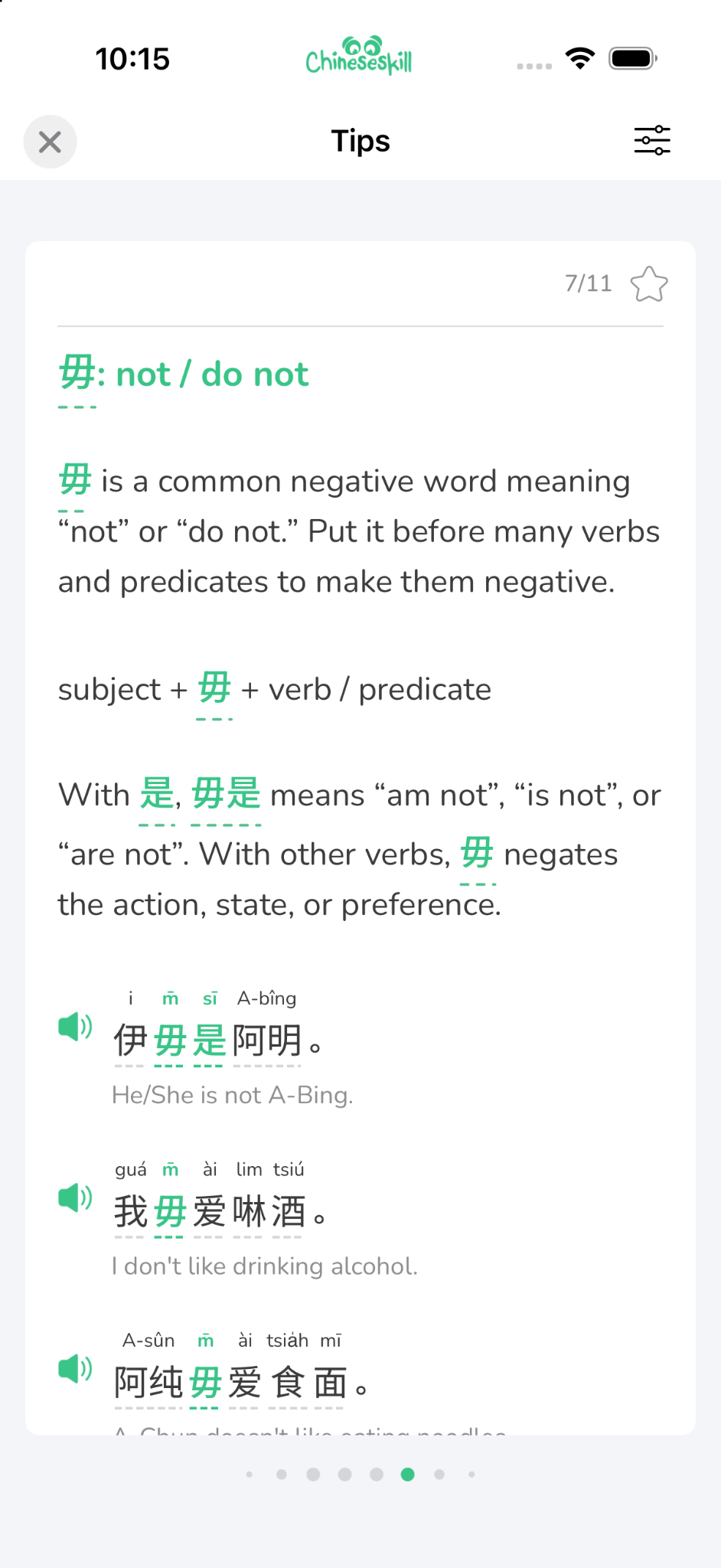
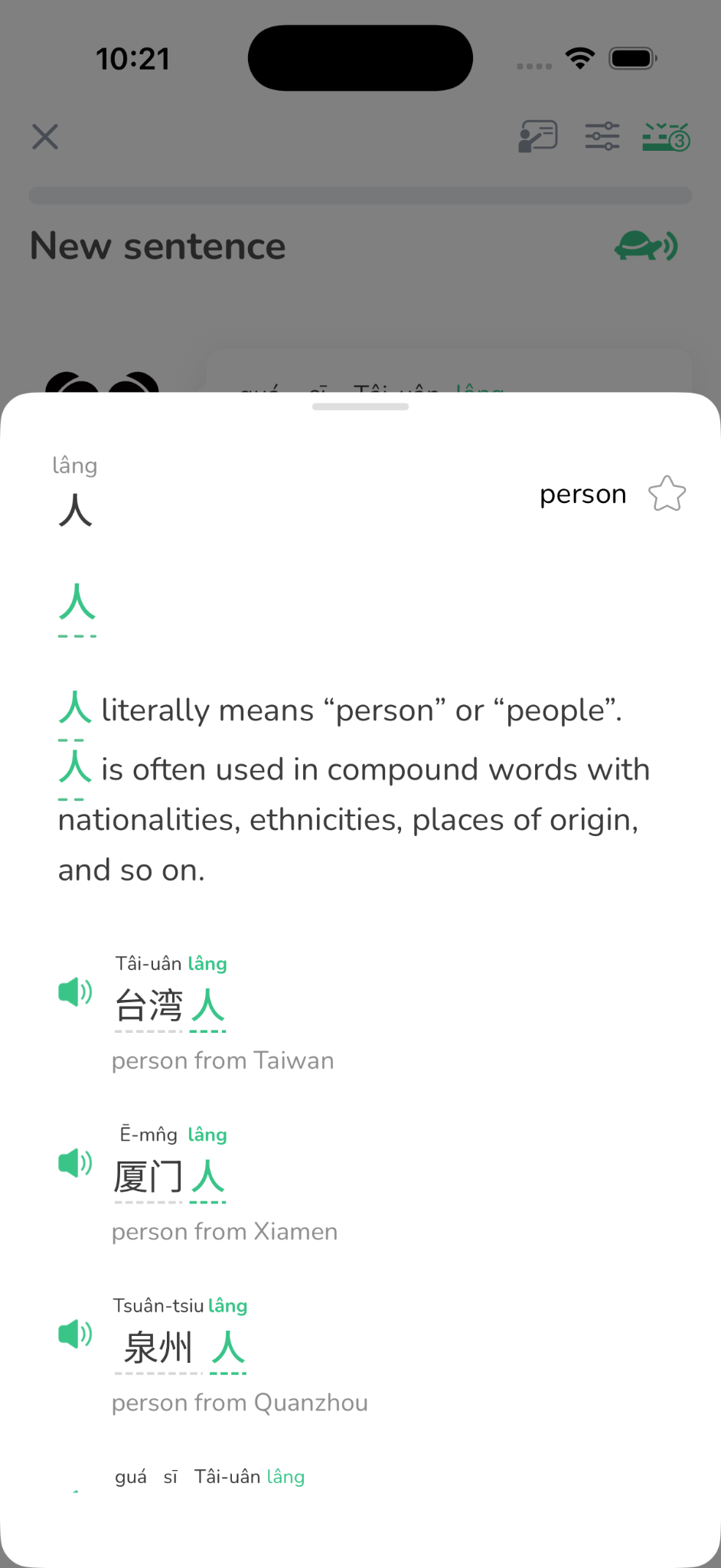
Sometimes one detail is enough to clear things up. After reading an explanation, you might return to the question and notice a word you’d overlooked. That gives you something to work with the next time you see a similar sentence.
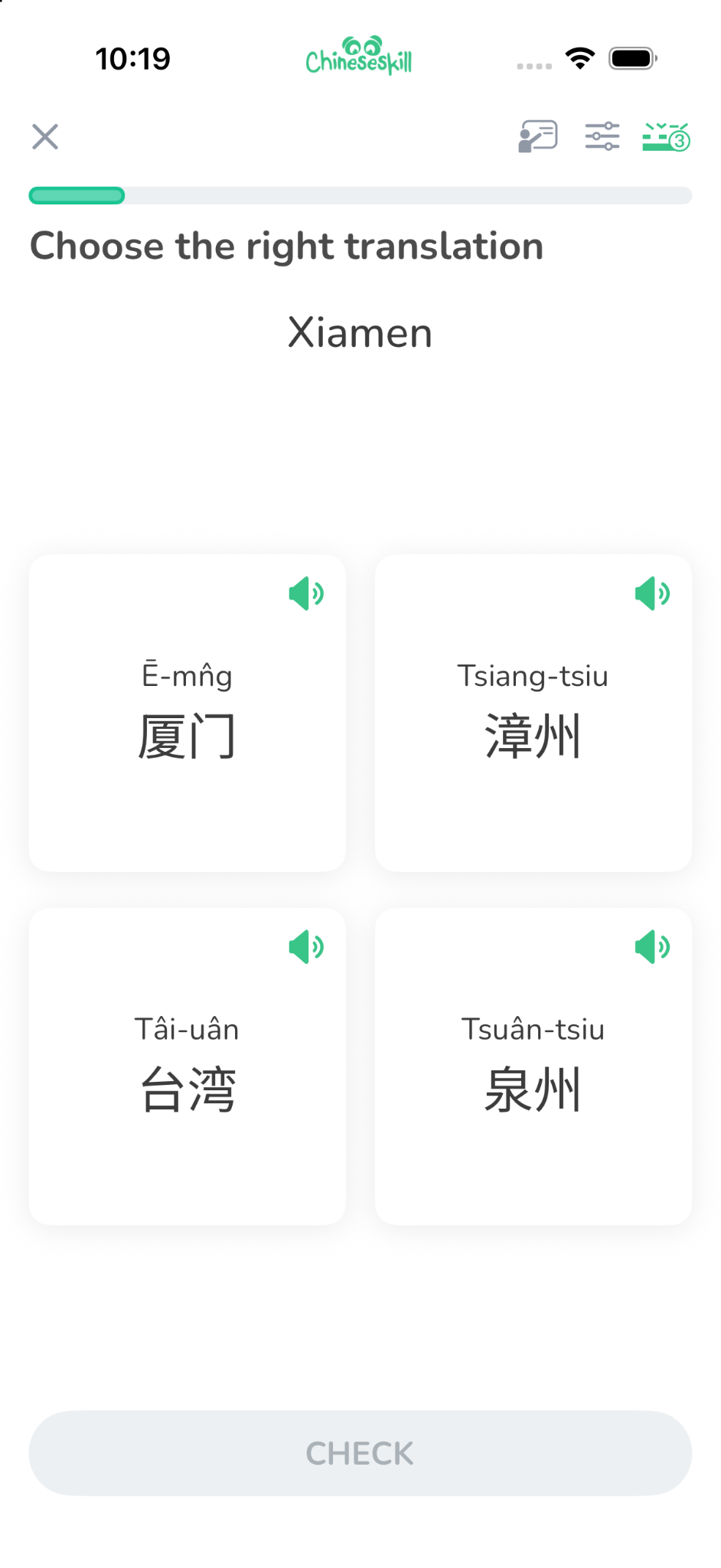
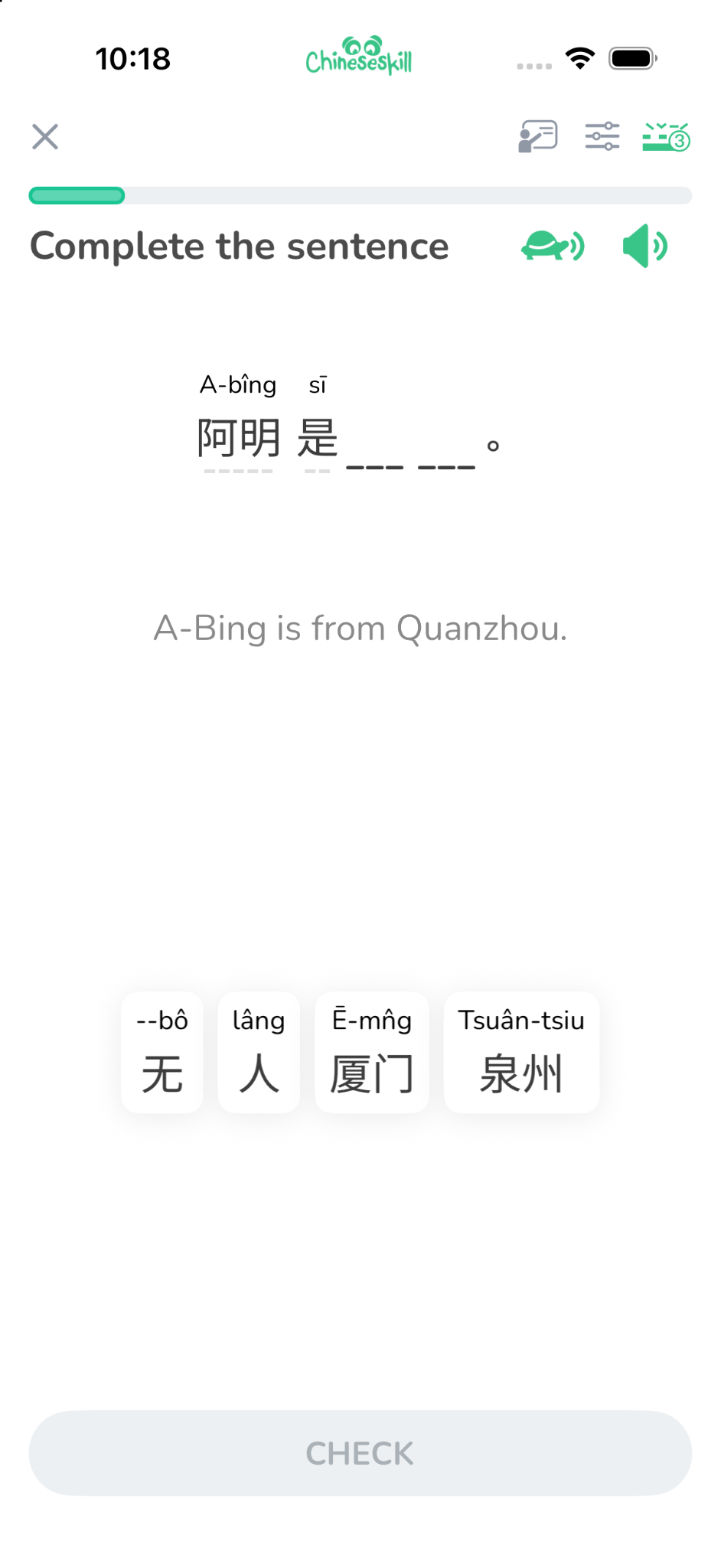
The lessons include listening, speaking, spelling, and exercises that bring what you’ve learned together. A word may come easily when you hear it but disappear when it’s your turn to say it. Practicing it in different ways gives you a chance to notice where you need more help.
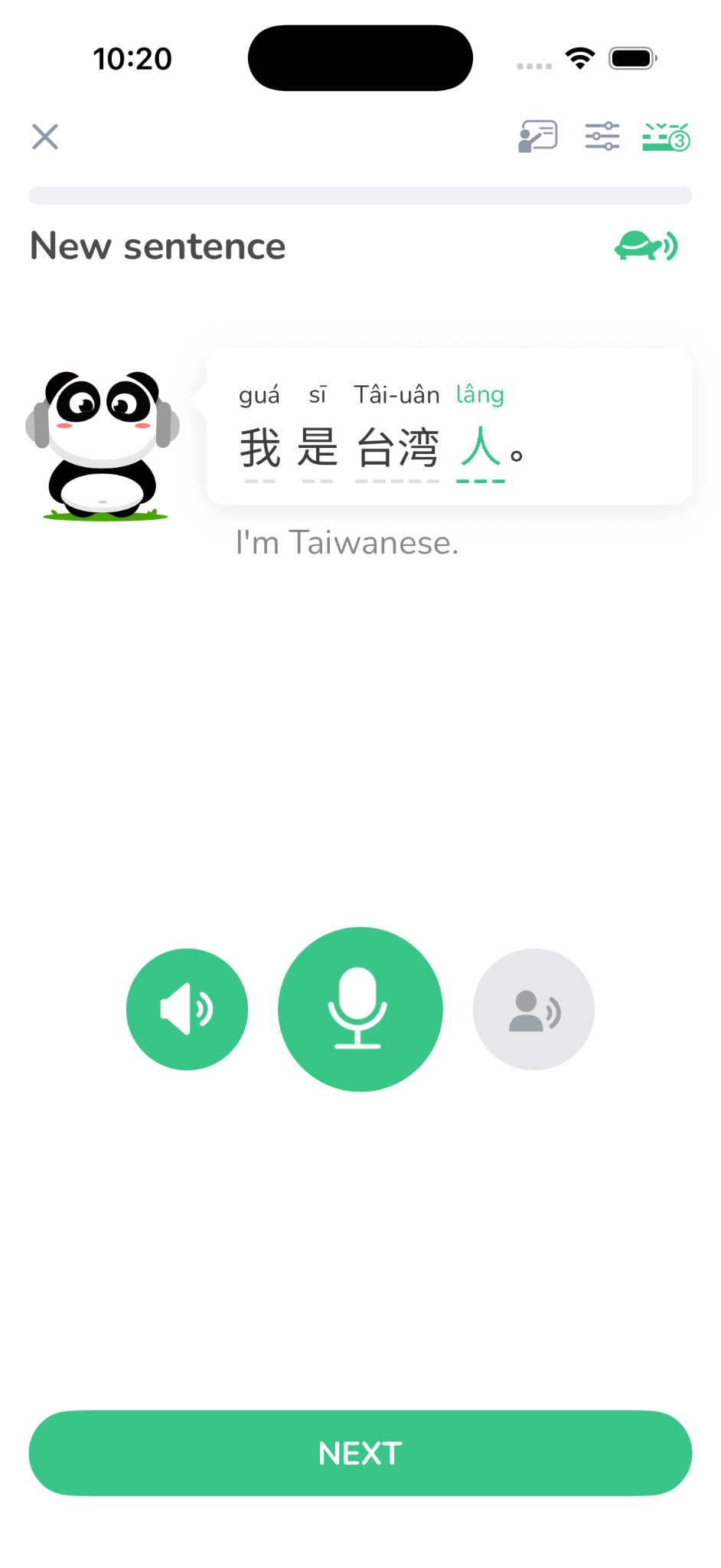
Get comfortable with Hokkien pronunciation at your own pace
An unfamiliar sound can be hard to catch, even when you replay it. And seeing a pronunciation guide doesn’t necessarily mean you know how to read it yet. There’s no need to figure out every sound and symbol in one sitting.
ChineseSkill pairs native-speaker audio with Tâi-lô romanization, which writes pronunciation using Roman letters and tone marks. Following the guide while listening to one short phrase gives those symbols a sound to connect to. If part of the phrase is still unclear, replaying it with just that part in mind can feel more manageable than trying to get everything right at once.
As a phrase becomes familiar, you may want to see how much you can remember on your own. The course lets you hide the romanization or translation, or turn off audio autoplay so you can answer before hearing the recording. Until you feel ready, it’s fine to keep the support that helps you follow along.
Put what you learn into everyday conversations
Imagine practicing what to say when ordering food, then hearing a question in return. You’ve prepared your own line, but now you have to understand the other person’s. That moment can feel quite different from answering an exercise.
Each unit in ChineseSkill includes a practical dialogue that puts its vocabulary and expressions into an exchange. The topics include ordering food, shopping, and conversations at work. Hearing both sides gives you something a phrase on its own can’t: a chance to follow what comes before your line and what might come after it.
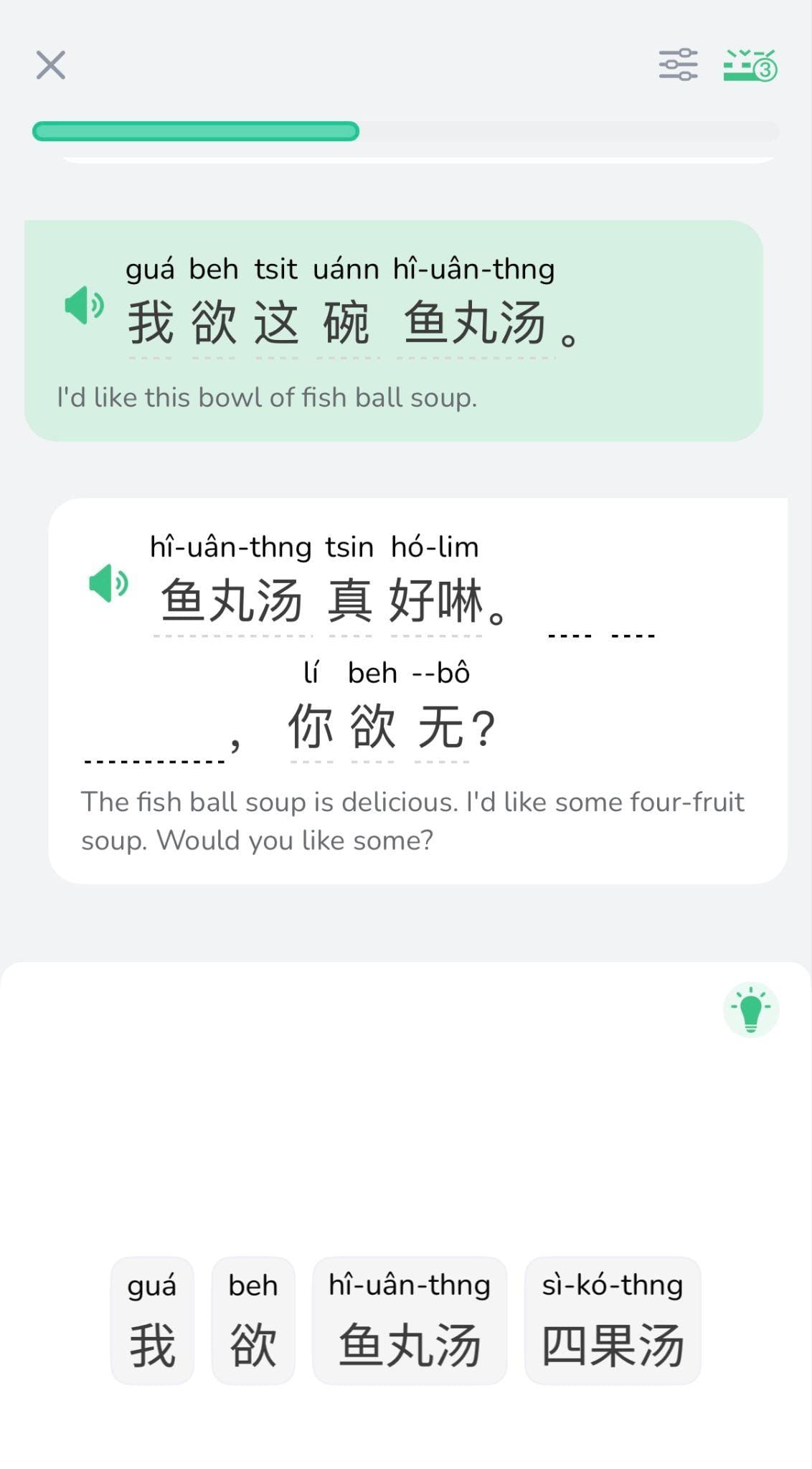
Once you can follow a dialogue, taking one person’s part is a useful next step. Pause after the other person speaks and give your response before replaying it. There’s time to hesitate or try again. Later, changing one detail with a word you already know can help you practice saying something of your own.
A friend or relative may answer differently from the recording, of course. If you try an expression with them and don’t catch the reply, asking them to repeat it gives you another chance to listen. You don’t have to keep a whole conversation going for that exchange to be worthwhile.
Make review work for you
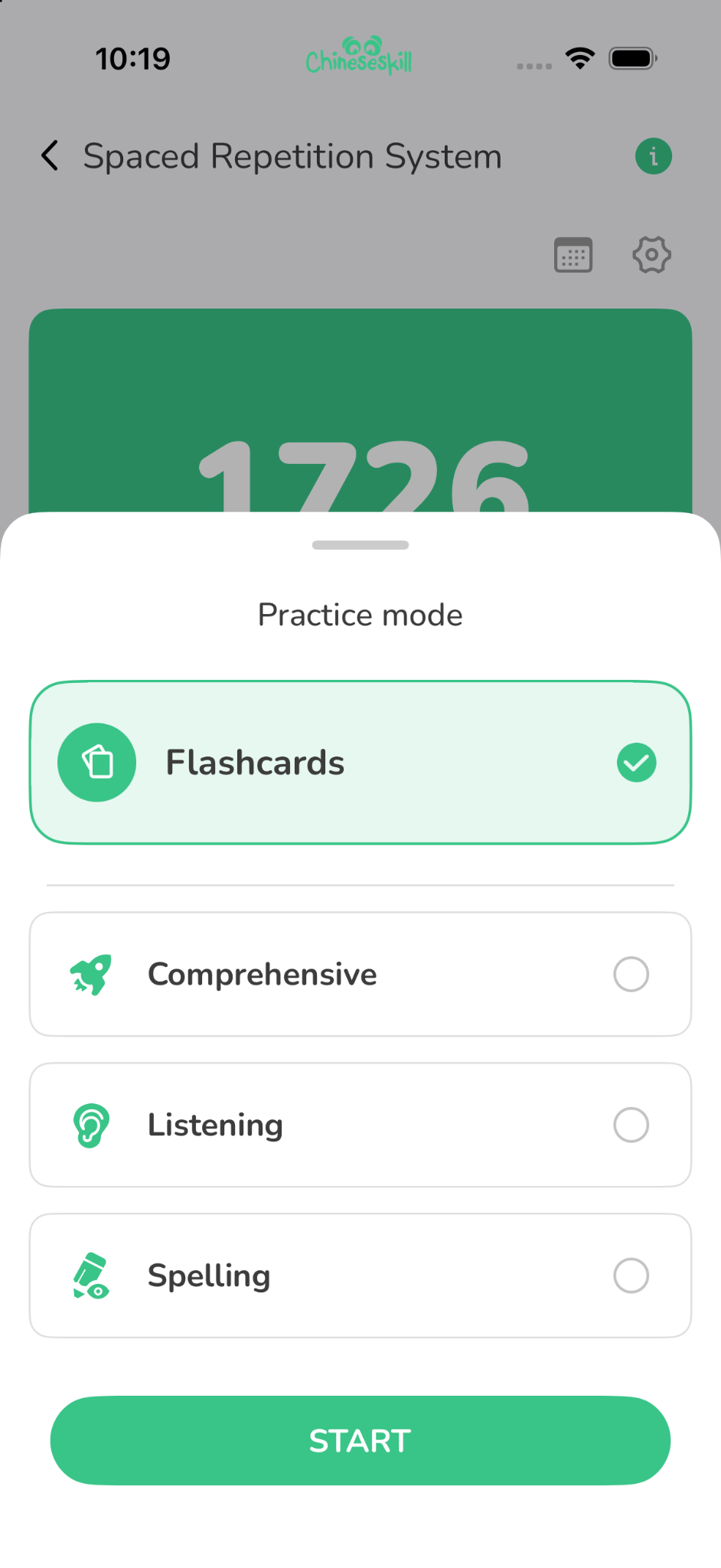
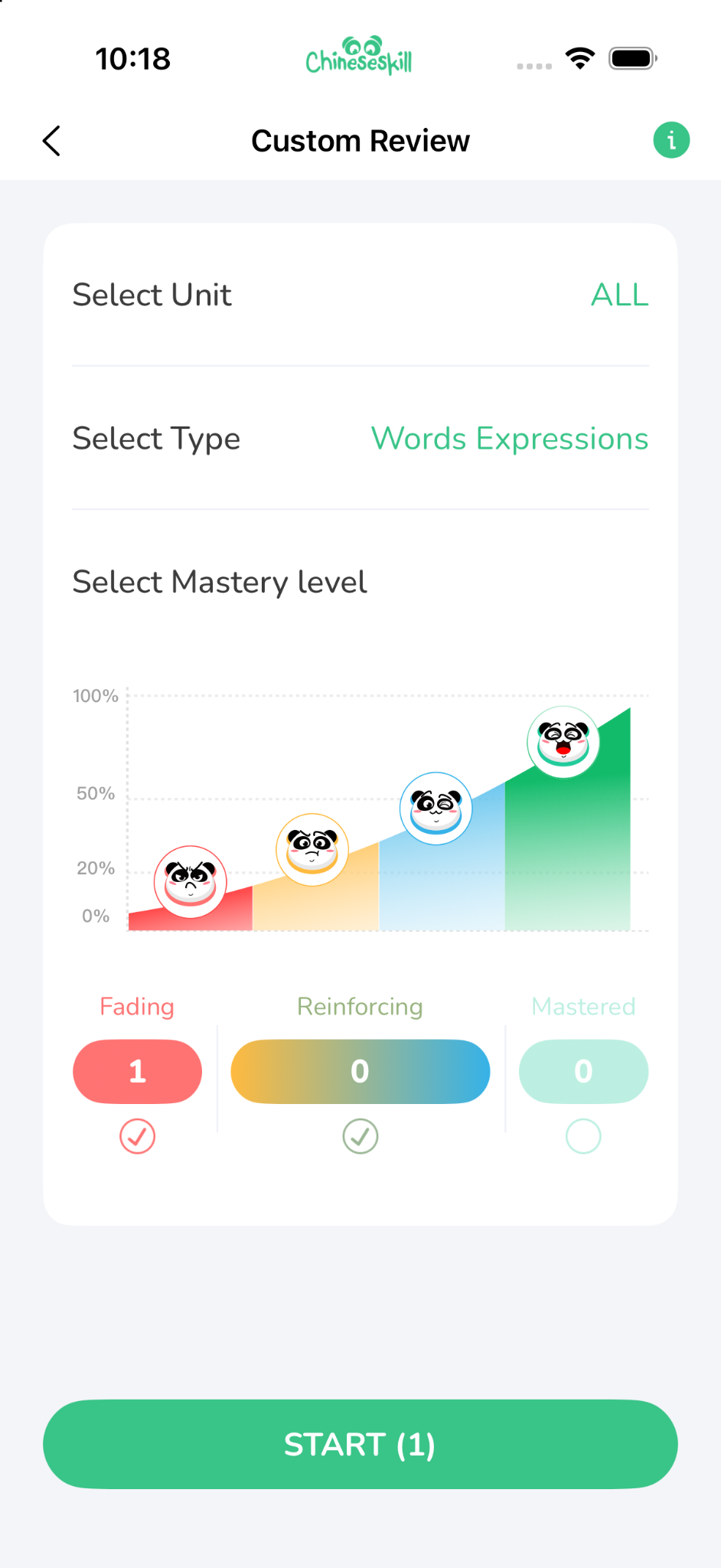
An expression felt easy yesterday, but today you’re drawing a blank. It’s discouraging when that happens, though it doesn’t mean yesterday’s practice was wasted. ChineseSkill’s spaced repetition system, or SRS, brings earlier material back over time so you have more chances to remember it.
What you need to review may vary from day to day. Perhaps you recognize a phrase on the page but have trouble catching it in speech. Choosing listening practice lets you spend time on that difficulty. If a few words from earlier units keep slipping away, review settings let you bring material from different units into your practice.
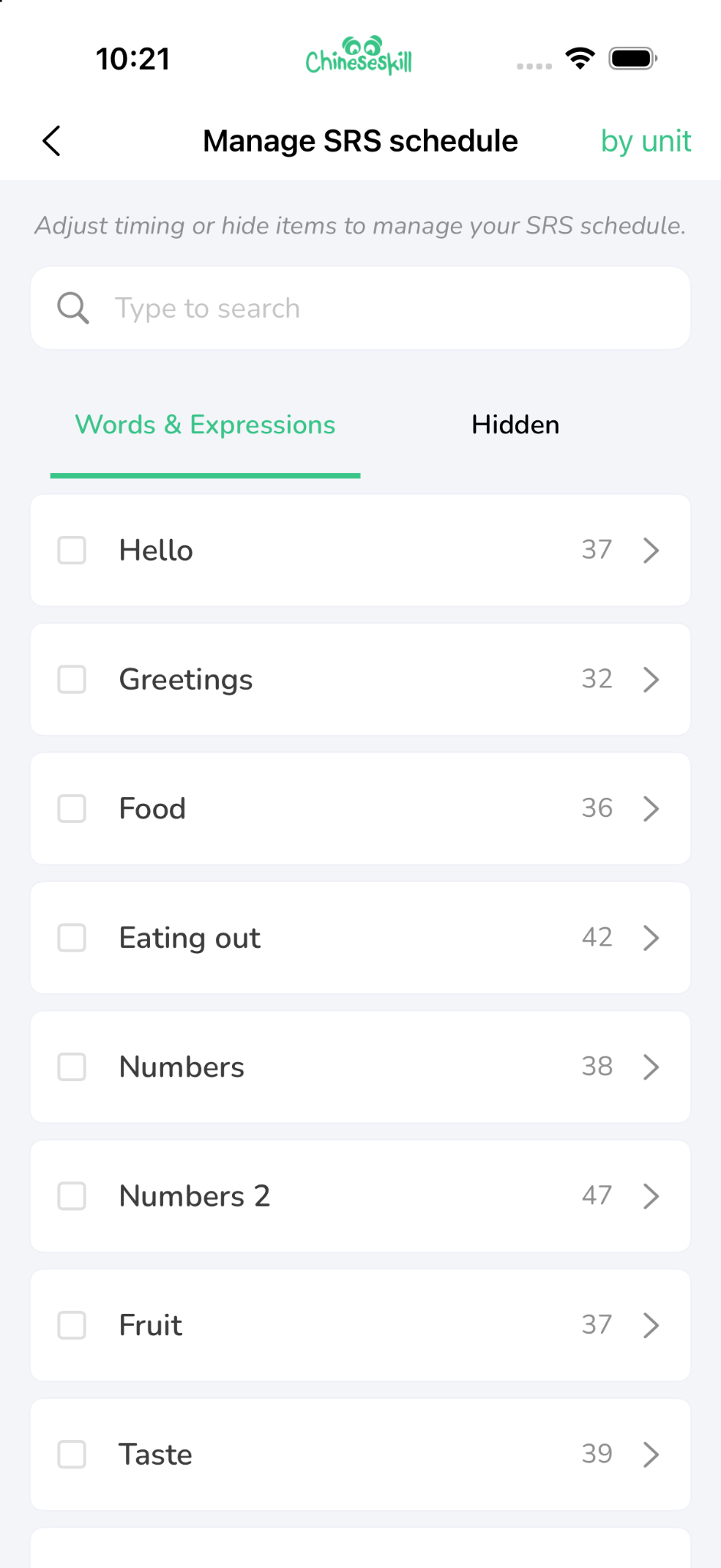
There’s also the familiar problem of finding something again: you remember a helpful explanation, just not which lesson it was in. Bookmarks give you a way back. Words, expressions, and knowledge cards can be saved and organized into folders in the Review tab, whether you want to keep a few food-related phrases together or revisit a grammar point.
On a busy day, returning to a few saved phrases may fit your time better than starting a new lesson. You can give those phrases some attention without feeling you have to cover everything at once.
Explore more Chinese varieties with ChineseSkill
If your interest in Hokkien leads you to other Chinese varieties, ChineseSkill also has courses in Mainland Mandarin, Taiwan Mandarin, and Hong Kong Cantonese. Pronunciation lessons in Pinyin, Zhuyin, and Jyutping are available for the relevant courses; the Hokkien course uses Tâi-lô.
Our Cantonese learning guide and guide to learning Taiwan Mandarin with ChineseSkill take a closer look at those options. If Hokkien is what you want to use with family or friends, though, there’s no need to add another course to your routine.
Ready to learn Hokkien? Visit ChineseSkill to get started on iOS, Android, or the web, and choose the Hokkien course. Your first goal might be understanding a familiar greeting or saying something to a relative you’ve always spoken English with. One expression you’re looking forward to using is a good place to begin.