X Ways to Leverage AI to Learn a New Language
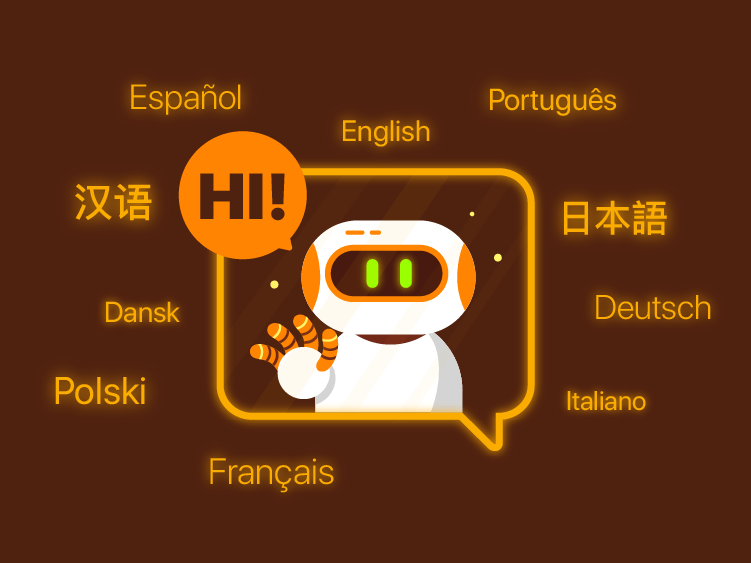
How AI Can Help You Learn a New Language
Learning a new language is a challenging but rewarding endeavor. Fortunately, advances in artificial intelligence are making language learning more accessible than ever. In this blog post, we'll explore some of the top ways AI can assist you in mastering a new language.
Chat with AI Tutors
AI-powered chatbots allow you to practice conversational skills in your target language. Apps like Duolingo Bots let you chat in Spanish, French, German, and more. The bots correct your mistakes, recommend vocabulary, and provide a judgment-free way to improve your speaking confidence. Conversing with a chatbot gives you the immersive practice needed to refine your language abilities.
Get Feedback from AI Writing Assistants
Writing in a new language can be intimidating. AI writing assistants like Grammarly provide instant feedback on your grammar, syntax, spelling, and style. By flagging errors and providing corrections, these AI tools help reinforce proper rules so you can write more fluently. The assistance builds your confidence and improves accuracy.
Listen to Text-to-Speech Apps
Hearing proper pronunciation goes a long way towards mastering a language. AI text-to-speech apps like NaturalReader allow you to input text and hear it spoken aloud. You can even select different accents and speeds. Listening to passages in the target language helps cement proper pronunciation and cadence in your mind.
Use AI-Powered Translation Apps
Translation apps like Google Translate utilize AI to offer lightning-fast and accurate translations. While not perfect, they provide a quick way to grasp the essence of a text written in your target language. You can even use the camera translation feature to instantly translate menus, signs, and other texts in the real world. The apps serve as an on-demand interpretation tool.
Let AI Be Your Tutor
Dedicated language learning apps employ AI in various ways. For example, Duolingo uses AI to analyze your progress and create an adaptive curriculum tailored to your needs. Other apps use AI tutors to provide detailed explanations and give feedback. The AI fills in gaps and keeps you on track in your studies.
A Summary of AI Language Learning Platforms
Text-to-Speech (TTS)
One of the most powerful applications of AI in language teaching is Text-to-Speech (TTS). TTS technology converts written text into natural-sounding audio, which can be used to create original audio content for language learners of all levels.
There are several TTS synthesis tools available, such as Google Text-to-Speech, Resemble AI, Murf AI and Synthesys, which offer a wide range of voices and languages to choose from.
Language teachers can use these tools to create engaging listening materials, including dialogues, stories, and news articles, which can help students improve their listening skills and pronunciation.
With the right applications, AI can make language learning more personalized, efficient, and interactive. So don't be afraid to utilize these amazing innovations as you pursue a new language. Your ideal AI tutor is out there!
Chatbot
ChatGPT, Duolingo, Fluenday, and Replika are examples of popular language practice chatbots that utilize AI. Language teachers can use these chatbots as supplementary tools for speaking and writing practice, allowing students to practice their language skills in a controlled and supportive environment.
Speech Evaluation
ELSA Speak, Pronunciation Power, and SpeechAce are examples of popular speech evaluation and feedback tools that utilize AI.
Grammar checker
Grammarly, ProWritingAid, and Ginger
AI language learning platforms
Lingostar.ai
language.com
Here are 4 useful ways to leverage ChatGPT to help learn a new language:
Practice conversations. Ask ChatGPT to have a natural conversation with you in the language you are learning. It will respond in that language, allowing you to practice speaking and listening. You can correct any errors to further learn.
Generate reading materials. Tell ChatGPT
Use it as a dictionary. Synonym, allocation dictionary.
Example sentences.
Correct errors.
Get grammar explanations. If you are struggling with a particular grammar concept, ask ChatGPT to explain it to you in simple terms in the language you are learning. This can help clarify confusion.
Expanded vocabulary. Tell ChatGPT a concept and ask it to provide a list of 10-20 words and phrases related to that topic in your target language. Learning these vocabulary words helps build fluency.
Translation practice. Give ChatGPT a paragraph in English and ask it to translate it into the language you are learning. Then try translating it back to English yourself as practice. Doing two-way translations strengthens language skills.
The key with ChatGPT is being very specific in your requests and prompts. It helps if you frame the questions or practice activities around your learning goals and current skill level. With some thoughtful guidance, ChatGPT can be a useful addition to more traditional language learning methods and resources.